
Native
Gardening
Guidebook
Gardening
Guidebook
A guide to planning, planting, and maintaining a garden of native plants — for members of Wild Ones Capital Region NY.
For the Capital Region, New York
A WOCRNY member resource
-p.
Wild Ones Capital Region NY Board of Directors would like to express our appreciation to the Common Roots Foundation for funding our grant to create this gardening guide.
Grant awarded Spring 2024
Wild Ones Capital Region New York (WOCRNY)
Our membership is comprised of a diversity of individuals (and landscapes) sharing a common thread that ties us all together — we all value native plants and biodiversity. We share a desire to be a guardian of our wild places.
Thank you for visiting our Native Gardening Guidebook. Special thanks to the Common Roots Foundation for the grant funding and the many volunteers who brought this concept to fruition.
Follow us on Instagram and Facebook, or check the event calendar on the WOCRNY website for upcoming events, social and volunteer opportunities.
Thank you for being a WOCRNY member — truly. Your membership supports projects initiated by our national team and helps us locally. If you would like to be more involved, we welcome you.
Please join us — there are so many ways to become involved. Please do not hesitate to reach out with any questions, concerns, or volunteer ideas. I hope to meet you at one of our upcoming events!
Welcome, members. We are glad you're part of our movement to support our ecosystem by planting native plants. This guide will help you plan, plant, and maintain your native garden — written for beginners and experienced gardeners alike.
What makes this guide unique is the inclusion of links to trusted online resources — blog posts, videos, apps, and plant lists from Wild Ones, Homegrown National Park, the Xerces Society, and the Monarch Joint Venture.
Many gardeners find it helpful to keep a journal where they record plans, sketches, and observations to return to. Throughout this guide, the 🌱 seedling with a 📓 JOURNAL · #XX badge marks an activity worth putting into your journal — flip to the matching #XX in the printable Native Gardening Journal.
Each section opens with background information under green banner headings — the "why" behind each topic.
Background is followed by concrete action steps — practical things you can do in your own garden this season.
Wherever you see the 🌱 seedling, it marks a journal activity — a place to plan, sketch, or record what you observe.
As you use this guide you may find it helpful to look at other resources that provide an overview of the garden planning process:
A healthy planet starts with native plants. They are the foundational block in the food web we all depend on.
Native plants support pollinators and wildlife in ways that non-native ornamentals cannot:
Many native plants play a critical role in the conservation of butterflies and moths, serving as the primary food sources for larvae. One in four native bees needs a specific flower to collect pollen. A bit more intention in plant selection lets us give pollinators the partners they need.
Hundreds of species rely on just one or two specific plants (or groups, genera or families of plants) for reproduction, meaning that if we are a bit more intentional with our plant selection, we can provide pollinating moths and butterflies with the essential plant partner they need to persist. This is especially important as habitat loss, climate change, and the proliferation of pesticides threaten moth and butterfly populations. Butterflies and moths need them!
Some of the most spectacular native plants were given common names that refer to them as "weeds" — Giant Ironweed, Joe Pye Weed, Jewelweed, and Milkweeds. As you learn more about those "weeds," you will appreciate their beauty and significance to our ecosystem.
While it is easy to refer to native plants by those common names, they are like "nicknames" — and one plant can have many! However, each plant has ONLY one botanical (or scientific) name, unique to that plant.
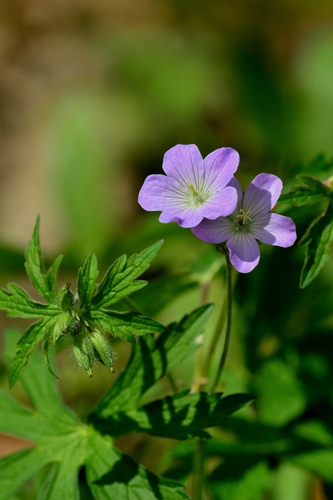
Wild geranium — a native woodland wildflower with lavender blooms.
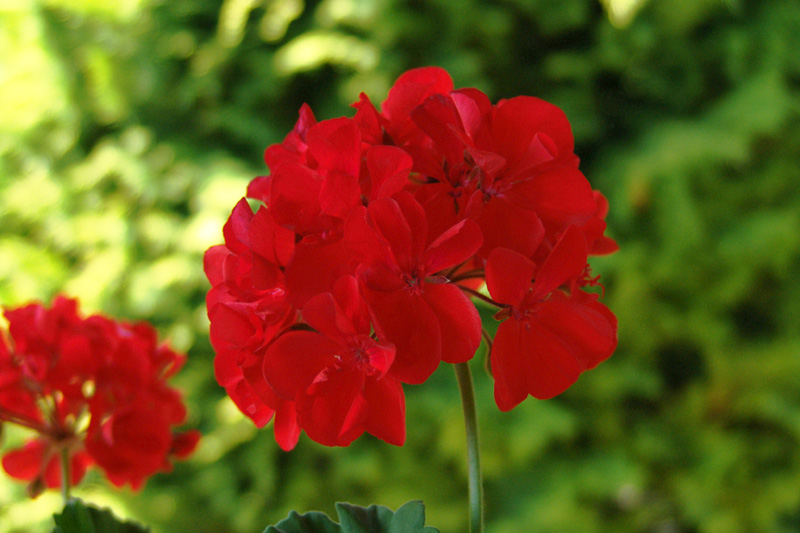
Zonal geranium — the annual bedding plant, not native to North America.
As you plan your garden, create plant lists that include the botanical/scientific species names — these are created by botanists and reflect the taxonomy of the plant in the order family › genus › species, written in Latin. Including them in your records will help you distinguish similarly named plants as your garden grows.
Many pollinators may be challenged to extract nectar from a plant with an altered bloom or to recognize a cultivar as a food source. Wild Ones encourages you to build a landscape of food sources, not merely decorations. Look for straight native species and avoid cultivars/nativars.
Wild Ones Capital Region NY (WOCRNY) highly recommends the use of the NY Flora Atlas to identify which plant species are native to our local counties — and to accurately spell their scientific names. Check a specific plant at a nursery before you purchase; just because it is labeled "Native" does NOT indicate it is native to New York.
Search the Atlas by inputting a common nickname or a scientific name. In the example below, we have used the Atlas to check whether two species in the genus Helianthus are native to New York.
newyork.plantatlas.usf.edu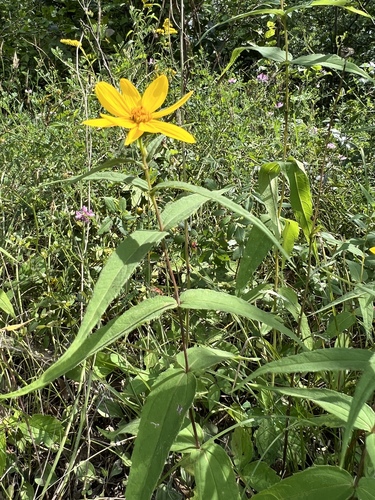
Woodland sunflower. Hosts 50 pollen-specialist bees.
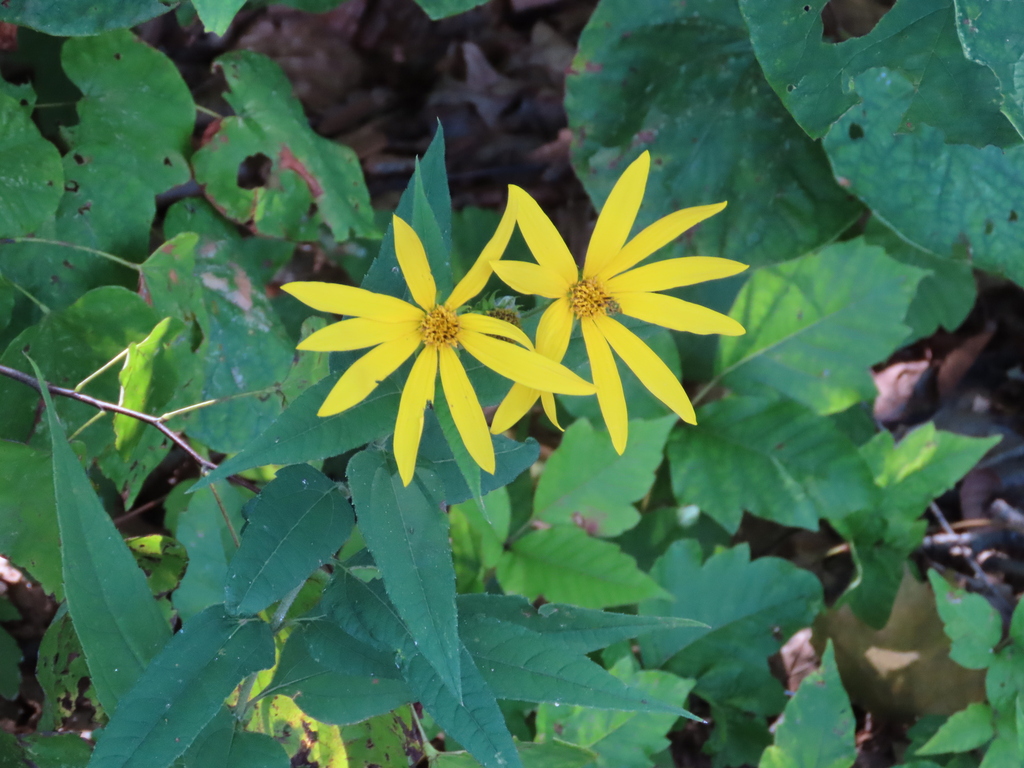
Hairy sunflower. Native to central / southern US, not NY.
Source: NY Flora Atlas for the photos and names.
WOCRNY relies upon the NY Flora Atlas to identify which plants we will sell at our plant sales and include at our annual seed swap celebration. We do not offer cultivars — only straight native species.
Keystone plants are native species that act as the foundation of an ecosystem — providing essential food and shelter for wildlife.
Per the National Wildlife Federation, keystones support roughly 90% of butterfly and moth species and nourish specialist bees — forming a critical, irreplaceable link in the food web. Before making your plant selections, consider which keystones you want to include.
Fourteen percent of keystone plants support 90% of moths and butterflies. For example, 436 caterpillar species use the White Oak (Quercus alba) as a host, and 50 pollen-specialist bees rely on Woodland Sunflower (Helianthus divaricatus).
List 3–5 keystone plants you'd like to include. Note their ecoregion and what species they support.
As you plan your garden, you may want more detail on candidate plants — mature size, preferred soil conditions, noteworthy characteristics, suggested partners, and seasons of interest. Consider plants that will be eye-catching each season, including winter — those with interesting texture provide visual interest and help birds find shelter and seeds.
family › genus › species. Single quotation marks = cultivar — avoid.
The authoritative source for what's truly native to our local counties.
They support ~90% of butterfly & moth species and specialist bees.
Just 14% of keystone plants carry 90% of the lepidoptera load. Choose well.
An ecoregion is a geographical area defined by similar ecosystems — climate, geology, soils, plants and animals. Knowing yours is more useful than the traditional "hardiness zone" for native plant choices. Within the WOCRNY seven-county catchment area, ecoregions vary by address.
Use the resources above to find your ecoregion. Record its name and a few key characteristics (climate, soils, typical plant communities) — you'll return to these notes every time you choose a plant.
You should know the path of the sun, and the shady areas of your yard based on the time of day where you plan to create a native garden, so you know what plants are best suited for the space. Plants thrive if they have the right amount of sun.
It is best to do this on a bright sunny day. You can do it twice — once before the leaves have filled out in the spring and again after the leaves have filled in.
Identify your garden's sun exposure levels. Note hours of direct sun for each zone, and which category each falls into.
To determine what kind of soil you have, you need to get your hands dirty! Dig a handful of soil from the area where you are planning your garden. Dampen some soil and form it into a ball. Then squeeze the ball.
Each soil type tells you how water behaves and which native plants will thrive. The columns below pair the squeeze-test result with matching plant choices.
If the ball crumbles and falls apart, your soil is SAND-based.
If the ball presses into a flat ribbon between your fingers, your soil is CLAY-based.
If the ball forms a rough crumbly ball when squeezed, your soil is LOAM-based.
Your county's Cornell Cooperative Extension can do soil testing for you. As they explain: "A soil test can tell you what nutrients are in your soil, the state of its health, or even if you have contaminants harmful to humans, plants, or the environment. Together with healthy gardening practices, testing can lead to better management as well as safe and productive soils." A test also saves you money by eliminating unnecessary fertilizer — and protects waterways from runoff.
Record the results of your squeeze test. Note your soil type, any differences across your garden area, and whether the soil feels dry, moist, or wet.
Eight Partnerships for Regional Invasive Species Management (PRISMs) exist across New York State and work to prevent or minimize the harm caused by invasive species on New York's environment. The video "Invasives: Reality of Management" with Addison Kubik of the Capital Region PRISM is a great place to start — additional information is on the DEC/PRISM website.
How will you remove any turf grass from the area you wish to create a native garden? It is best to eliminate grass before you plant natives. Turf removal methods include smothering, digging up, or using a rented sod cutter. Many have found the "lasagna method" — sheet mulching with cardboard and compost — an easy way to prepare a garden bed.
Call 811 (or call811.com) before digging — utility lines get marked free of charge. Required by law in NY.
Smothering and manual removal are safer than glyphosate. If chemicals are needed, research risks first and never use near water.
After watching the videos above, consider what removal method you will use if you have turf grass or invasive species in your planned garden space. Always remember SAFETY FIRST before you begin digging!
Ecoregion matters more than hardiness zone — it guides every plant choice.
Track sun hours across 6 time slots; do the squeeze test to know your soil.
Clear the space before you plant. Try the lasagna method for turf.
Try a 4×4 ft space. Always remember safety before you dig.
It helps to identify the goals you have for your space before you start picking plants.
Note what goals you have for your garden, using the questions above as prompts. Be specific — "host monarchs" gives clearer plant choices than "support wildlife."
Before selecting plants, it is helpful to see what they look like in "real" gardens. Tour some of the native gardens throughout the Capital Region.
| Garden | Notes | Address |
|---|---|---|
| Unity Church WOCRNY garden | Planted by WOCR members, 2023 | 1500 Western Ave, Albany |
| Pine Bush Discovery Center | Labeled native garden outside the center | 195 New Karner Rd, Colonie |
| Bethlehem Town Hall | Bethlehem Garden Club & Albany Co. Master Gardeners | 445 Delaware Ave, Delmar |
| Hudson Crossings Park | Meadow in the Sky: 18-oak allée, 87 understory trees & pollinator gardens | Lock C5, Schuylerville |
| Schenectady Central Park | Maintained by Schenectady CCE Master Gardeners | 180 Ptl. Arthur Claires Ln, Schenectady |
Keep notes about which plants you like. Take photos. Sketch which plants look good together.
With the information from the previous sections, you now can begin to identify which plants your property can support that will help you meet the goals you have for your garden.
Make a wish list of the native species you like and that suit your conditions. Remember that natives are more than pretty flowers — include native grasses, shrubs, and trees too! Early-blooming trees and shrubs can help feed newly emerged pollinators. Use the scientific names of plants to ensure accuracy.
Familiarize yourself with any relevant Homeowners Association (HOA) or town codes before you work on your design. Some towns and most HOAs require plants be no more than a specific height to avoid the property looking abandoned. If you work to make your garden look intentional — by edging beds or adding decorative rings of stone — the plants inside may be considered allowable.
As we embrace the change from traditional "golf course" front lawns to more natural yards with native plants, remember that change can be a challenge. Talk to your neighbors, explain your motives, and let them know that native plants take a few years to fully establish.
Signage can help inform passersby of your intention. There are several clever signs on the market:
You are now ready to make a sketch of your space using the list of plants you prepared. The sketch can be as simple as a bubble drawing showing where each plant (or group) will be placed. A planning chart should include each plant's height, flower color, bloom time, sun requirements, and common name.
If your goal is to provide a feast for pollinators, consider how many of each plant to include. An ideal pollinator garden offers constant, overlapping flowering from early spring to late fall. These guidelines come from Northeast Pollinator Plants:
Every little bit can help! Don't fret if you can't meet these guidelines — plant what you can now. A balcony flower box can save a pollinator in search of nectar.
Use anticipated width measurements at maturity to determine how many plants can fit in your space. Calculating the square footage of your site can help you determine how many seeds to sow — or individual potted plants — once you know their mature size.
Identify the square footage of your garden area. Then use each plant's mature width to estimate how many of each species you'll need.
Consider how you want to acquire the plants for your garden. The sources listed on the WOCRNY site have seeds, plugs, a variety of container sizes, and ball & burlap shrubs and trees available.
Neonicotinoid insecticides are systemic — they dissolve in water and are absorbed by plants, making the plant itself (including its nectar, pollen, and fruit) toxic. Levels can be high enough to make the plant toxic to insects for years after treatment.
There are different ways to acquire plants. Some are more budget friendly, while others help you get the garden established more quickly.
The most economical option. In the wild, most plants reproduce from seed — resulting in genetically diverse plants that adapt better to their environment and are more resistant to pests, disease, heat, droughts, and floods. Use locally sourced seeds from native seed nurseries or local seed swaps to restore ecosystems and ensure bloom times match regional wildlife. Avoid "wildflower" or "pollinator" mixes — many contain aggressive or non-native species. You can also collect seeds from plants at home.
🔗 Wild Seed Project — seed dispersal & collection →Young seedlings grown in soil-filled cells (up to 50 per tray). Each plug has an established root system, so plants establish quickly. More economical than potted plants when you're covering a large area, and the smaller hole size means less disturbance to existing trees and shrubs. Check the WOCRNY shopping guide for mail-order nurseries — many have order deadlines.
🔗 WOCRNY local nurseries & online sources →Plantable throughout the growing season. Often adjusts better to transplanting (less shock) and looks attractive with immediate foliage. More expensive, heavier to ship, and can become rootbound if potted too long. Plastic pots are not recyclable — more landfill. Be cautious accepting plants from friends or roadside sales due to Asian Jumping Worm risk.
No plastic pot, no soil — lighter, cheaper to ship, and stronger root systems that are less prone to transplant shock. Visible roots let you detect disease. Downsides: roots must stay moist and be planted as soon as possible after receiving. Shipped dormant, so planting window is narrow — late fall through early spring.
🔗 Bare root plant guide · College of the Environment, WWU →The tree root balls of ball & burlap trees and shrubs (referred to as B&B) are wrapped in burlap and wire to protect them during transport. Typically used for larger stock. Planting technique and aftercare matter — see Section 4 for how to plant and establish.
Know what you want before you shop; tour real gardens.
Include grasses, shrubs, and trees — not just flowers.
9+ species · 1+ grass · swaths of 8. Mature width determines count.
Native-plant specialists, not big-box stores. Always ask: grown without neonicotinoids?

Water your plugs and container grown plants a few hours before planting to make them easier to remove from their containers. Plant soon after removing them from their containers, to avoid drying out the fragile roots. Bareroot plants should be planted within a few days of receiving them. Keep the roots moist and cool until planting. Place the roots of bareroot plants in water for three to six hours before planting.
Many seeds require a cold, moist period called stratification to germinate — it mimics winter to wake seeds from dormancy through exposure to cold, moist conditions (usually in the refrigerator). Length varies by species. These seeds can be winter sown by broadcasting them in fall (no pots, soil, or attention), or by planting seeds in moist soil inside clean milk jugs placed outside as mini greenhouses. Seeds with hard coated shells require scarification — weakening the shell via abrasion (sandpaper), nicking, or hot water to allow water absorption.
For lots of plugs, consider a Hori hori knife — useful for digging a narrow hole deep enough for the plug's roots. Plan enough time (smaller hole, but still time-consuming), water the plugs well before planting, and water as you go (don't wait until you've planted 25 before watering the first). Some guides suggest laying plugs out where they'll be planted — only do this with multiple helpers, otherwise the plugs will dry out before you get them in the ground.
A short shovel with a narrow blade can make quick work of digging holes for plants in containers up to a gallon in size.
The NYS Department of Environmental Conservation (DEC) offers extensive instruction on how to plant container grown, bareroot, or B&B trees. The Arbor Day Foundation provides additional guidance on how to plant a bareroot tree. Please be careful to avoid "girdling" the tree trunk to ensure it can live a long, healthier life.
A benefit of native gardens is that once they are established, they require less water except during significant drought or heat stress.
New seedlings should never be allowed to completely dry out until they are well rooted. For young trees and shrubs, consider continuing a watering schedule for the first three years. Native plants require deep watering for good root development.
Note your watering schedule, which beds need more frequent attention, and anything you've observed about your garden's drainage.
Most native gardeners do not recommend adding amendments to the soil when planting native plants, as they thrive in existing, local soil and often prefer low-nutrient conditions. If you have selected plants that work with your site conditions, no amendments should be necessary — although some mulch on top might be used for moisture control. Read "The Myth of Soil Amendments" for the science.
Conserves moisture, suppresses weeds, moderates soil temperature, reduces erosion. Organic mulches enrich soil.
Disturbs ground-nesting bees; wood chips tie up nitrogen; inhibits self-seeding. Avoid dyed mulches.
Be aware that it takes time for your garden to mature. The popular adage is: the first year, the plants sleep; the second year, they creep; and the third year, they leap.
Walk your garden frequently — even in the winter months — and monitor how plants are doing. Which plants are thriving? Which need more moisture, sun, or space? In winter, look for critters nibbling on shrubs or trees and add barriers to protect them.
Record observations across the seasons — what's thriving, what's struggling, what's being nibbled, and what you want to try next year.
As you monitor your garden, you may discover caterpillars or insects munching on your plants. Use iNaturalist or the Picture This apps to identify them. If they are native, they are part of the life cycle of our moths and butterflies. Leave them! Rarely will they kill the plant, and the caterpillars will provide critical food for the chicks that are born in your neighborhood. If the caterpillars are not native, decide if it is critical to remove them and then use the least impactful means necessary. Avoid using treatments that might poison the "good" caterpillars and insects. Learn more at naba.org →
Maintenance means that you may need to do some weeding, especially while your plants are maturing. An established native garden often does not require a lot of weeding. Minimize how much you disturb the soil when weeding to avoid disturbing weed seeds. Most weeds can be killed by regular, consistent clipping at their base — but pulling out weeds by their roots is most effective.
Believe it or not, the day will come when you may consider dividing some of your plants! Some plants will need to be divided in the autumn while others will need to be divided in the spring. Learn more from Native Maine Gardens →
What your garden provides year-round is habitat for many other living beings. How you manage your garden in the fall and over the winter can significantly impact the well-being and survival of birds, bees, and more. It may take some time to accept that a "messy" yard is a healthy yard!
Spring "clean up" means removing trash, not leaves! Growing early blooming trees and flowers will support pollinators, who also need your hollow stems to use as nurseries. Keep busy growing seedlings!
Note: Dandelions are not native, but have naturalized over hundreds of years and provide early season nutrition for many pollinators — and for people willing to pick the greens for salads.
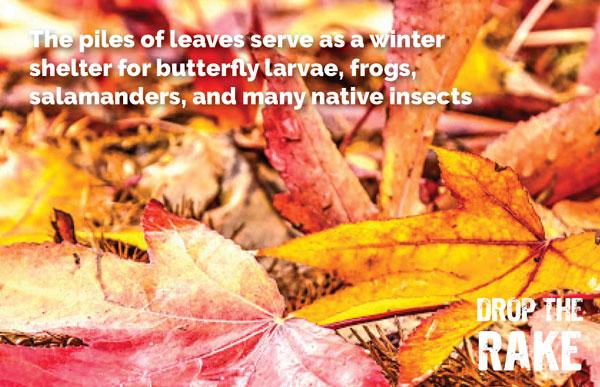
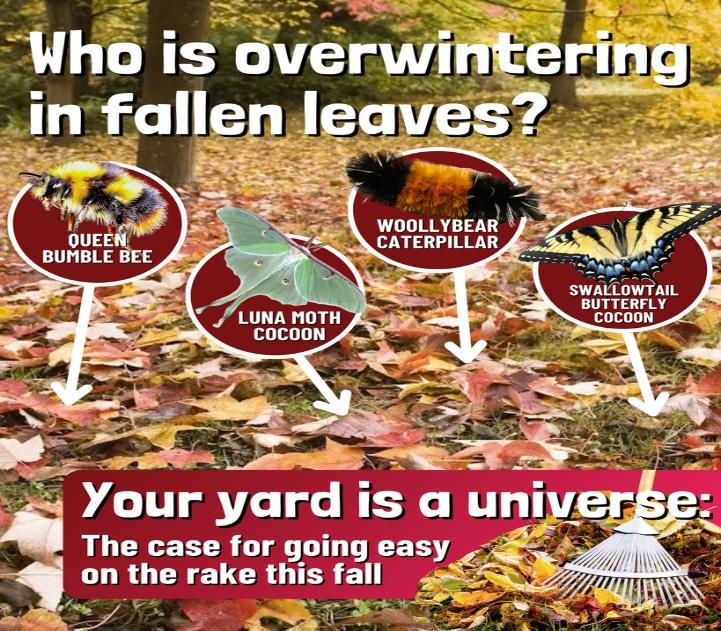
Leaves are not "litter"! They shelter overwintering insects and feed the soil. Rake into garden beds, compost, or thin piles at tree bases. Avoid shredding with a lawn mower — it destroys cocoons, chrysalises, and eggs.
Many pollinators use dried plant stems to overwinter or to lay their eggs — learn how and when to prune. Stems create attractive winter garden areas. Xerces Society's "Nesting and Overwintering Habitat" has detailed guidance.
Fall is the time to collect seeds if you want to plant them in other areas or share with others! WOCRNY and the Thacher Park Emma Treadwell Center hold a free seed swap every fall — bring seeds to share and take seeds to plant. Remember to leave some for the birds and to reseed your own garden.
Your garden provides shelter and food for creatures and birds. Consider how colorful shrub branches and berries can brighten your yard in the dark of winter. The WOCRNY website has a list of native plants with winter visual interest.
To qualify as a Wild Ones Certified Native Habitat through the Chapter Native Habitat Program (CNHP), you should:
Homegrown National Park helps you understand the biodiversity crisis with a science-based call to action:
Register your garden on the HNP map at homegrownnationalpark.org and add your dot to the movement.
On long winter days when you want to garden, there are webinars to watch and books to read.
Our chapter has archived past webinars you can watch anytime.
Recorded webinars by well-known voices in botany, landscape design, and wildlife biology — Doug Tallamy, Robin Wall Kimmerer, Larry Weaner, and others.
A curated collection of books featured in Wild Ones programming — practical resources plus inspiration for a more sustainable life. Purchasing through the Wild Ones page routes a portion of your purchase to Wild Ones and independently owned local bookstores, at no additional cost to you.
Wild Ones offers a friendly community dedicated to improving our environment. Join us at a membership meeting, garden tour, hike, or any outreach event. If you have ideas for further resources, please let us know.
WOCRNY wants to thank the following members for their assistance in creating this guide:
Laura Davis · Jan Silverman-Pollow · Melinda Costello · Lu Li
We acknowledge Kristi Shepler for applying for the Common Roots Foundation grant that was the impetus for this guide — and we thank the Common Roots Foundation for their generous support.